Do you lose muscle in a calorie deficit?
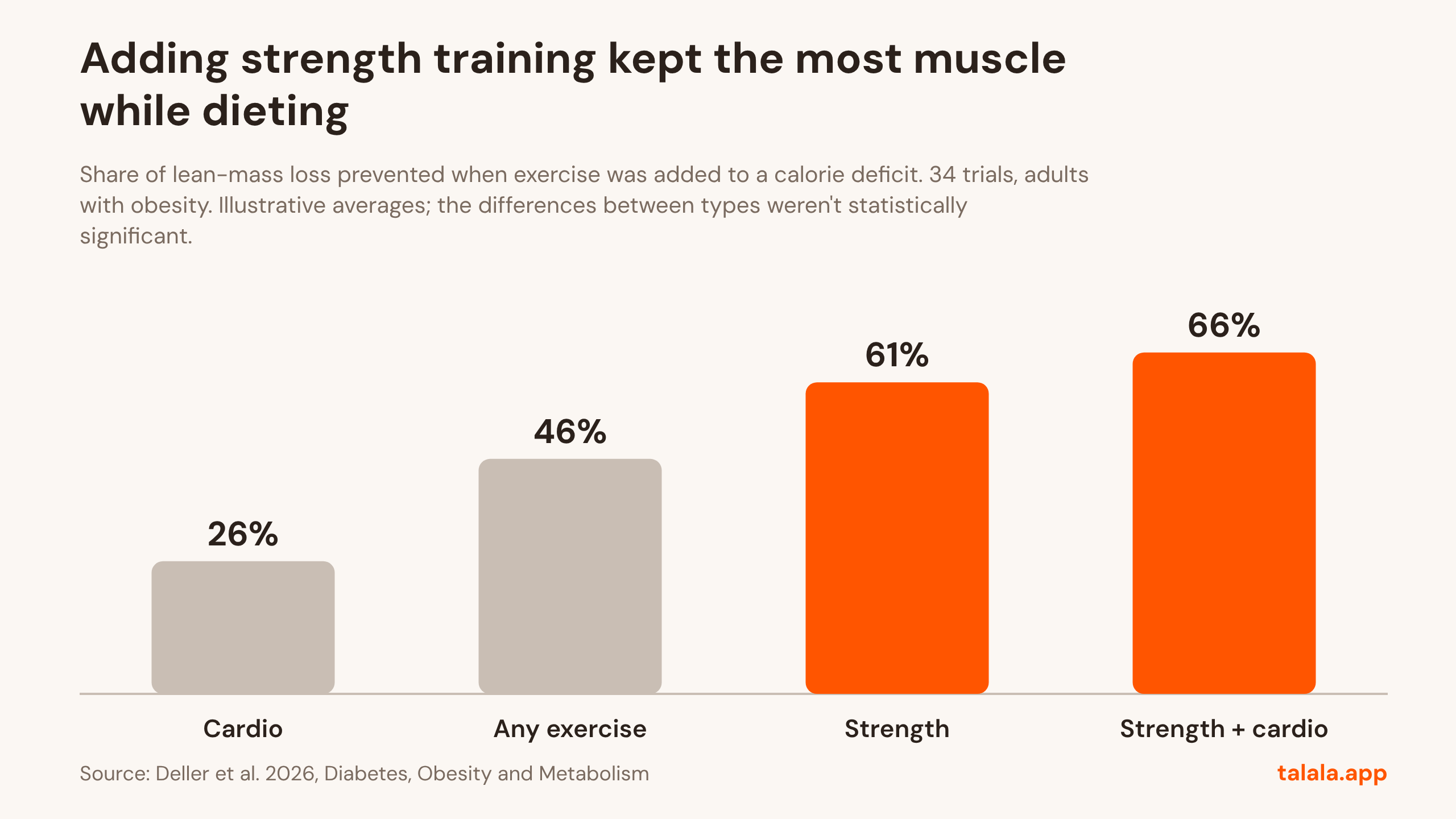
Usually some, and strength training helps you hold on to most of it. A 2026 meta-analysis pulled together 34 trials with about 1,450 adults, comparing people who only ate less with people who ate less and also exercised (Deller et al., 2026). The exercise groups kept about 0.9 kg (roughly 2 pounds) more lean mass on average. Lean mass is your muscle plus everything else that isn't fat.
By type of exercise, strength training made the biggest difference:
| What people did on top of eating less | Share of lean mass loss prevented |
|---|---|
| Nothing (diet only) | 0% (the comparison group) |
| Cardio only | ~26% |
| Strength training only | ~61% |
| Strength training + cardio | ~66% |
The trials were in adults with an average BMI of 30 or more, the authors think the effect might be a bit overstated, and women-only studies looked about the same.
What kind of strength training keeps muscle when you're eating less?
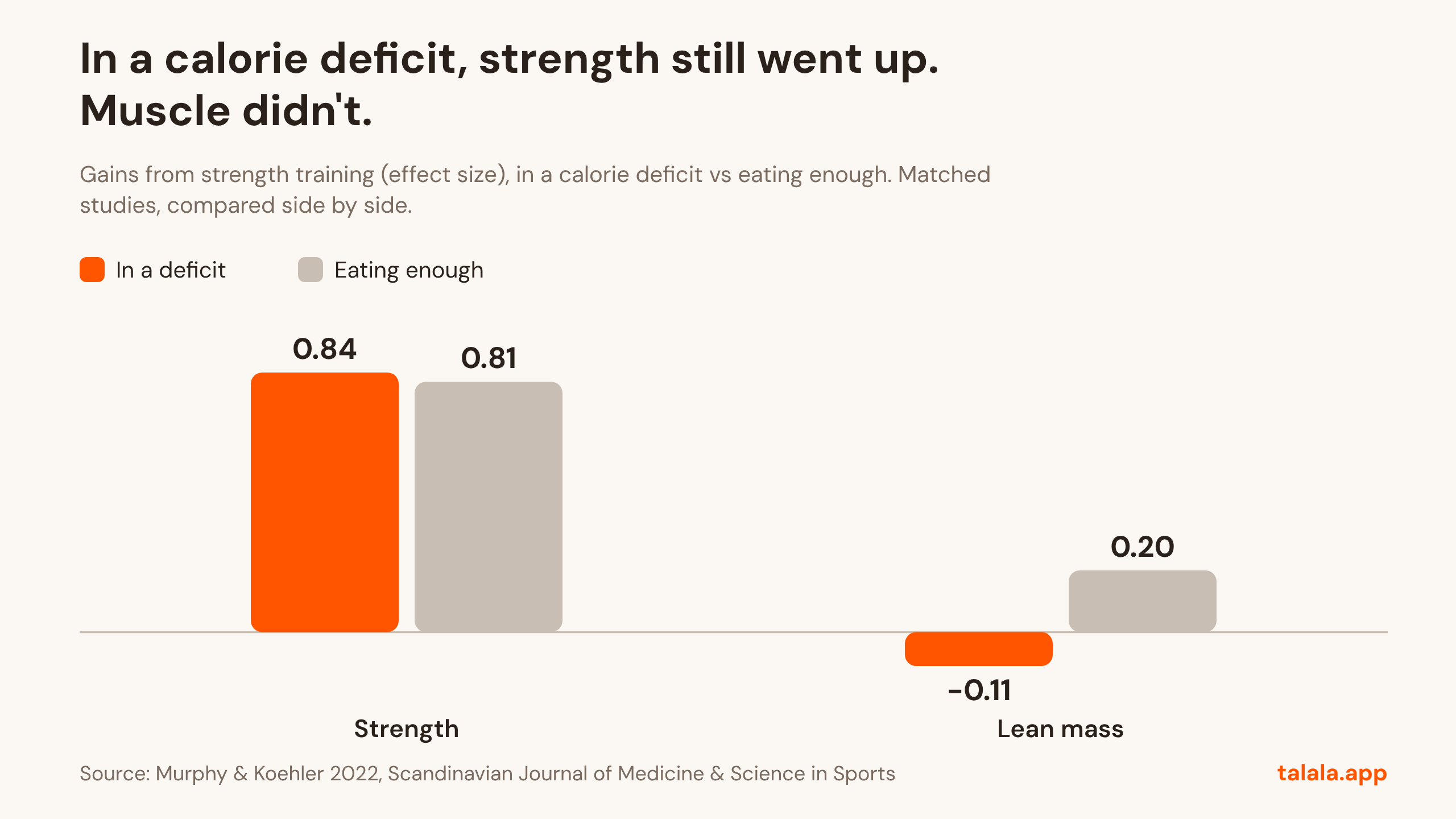
Pretty much the same kind that builds muscle, with weights that feel hard by the last couple of reps and get a little harder over time. A 2021 meta-analysis looked at strength training trials where people were in a calorie deficit for at least three weeks (Murphy & Koehler, 2021). The people eating less gained less muscle than people eating enough, but their strength still went up about as much.
That surprised me, in a good way. So I'd keep the weights challenging while you eat less, and add a rep or a slightly heavier dumbbell when it gets easier. The American College of Sports Medicine recommends making it a bit harder over time like that for healthy adults (ACSM position stand, 2026). There's more on lighter vs heavier weights in light weights vs heavy weights for toning.
How much protein do you need in a calorie deficit to keep muscle?
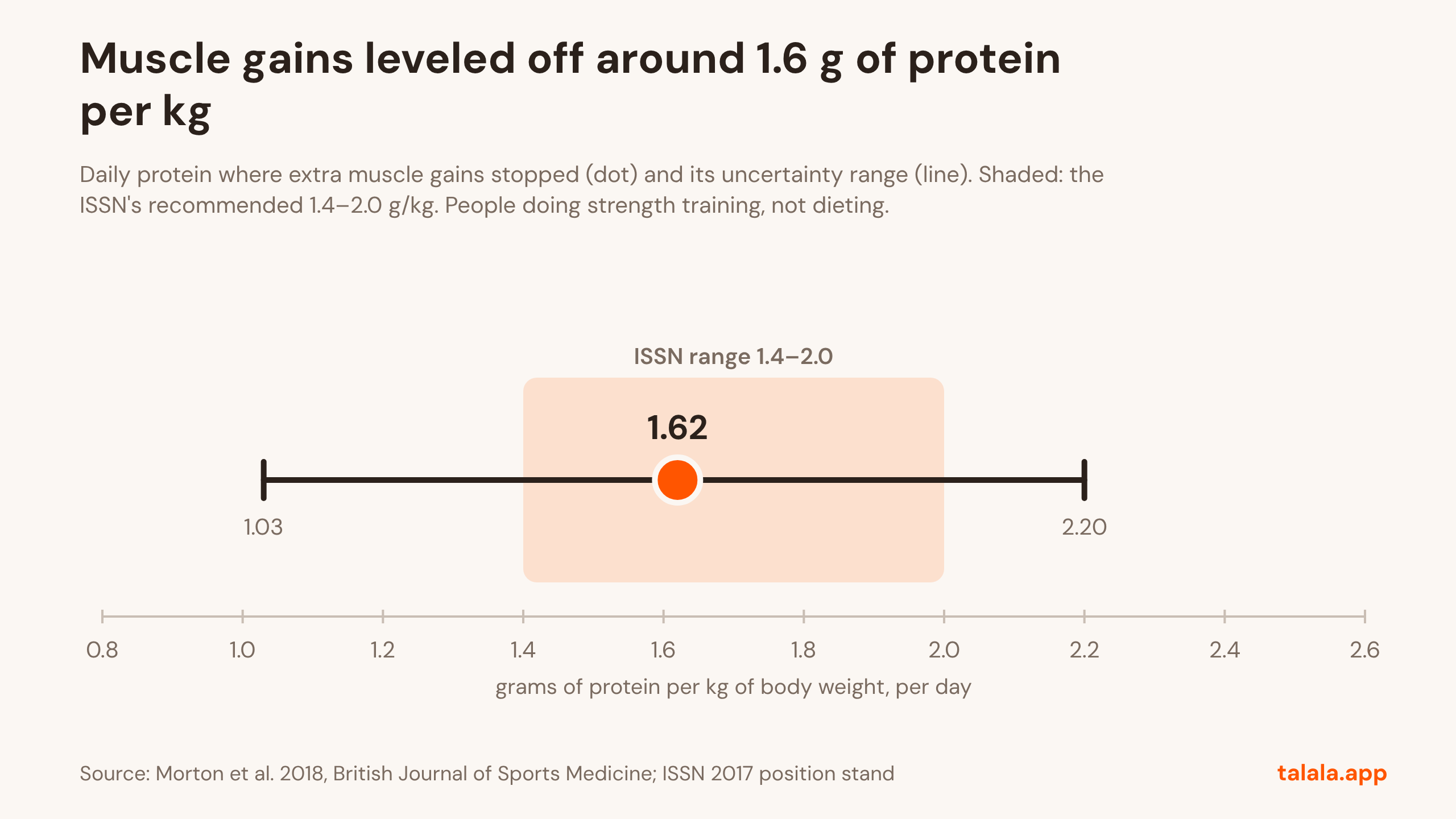
Around 1.6 grams per kilogram of body weight a day is a good place to start. That's where muscle gains leveled off in the biggest meta-analysis on protein and strength training (Morton et al., 2018). That's around 110 grams a day for a 150-pound woman.
Those people were eating enough, though, and the authors say about 2.2 g/kg covers your bases. The International Society of Sports Nutrition puts it at 1.4 to 2.0 g/kg for most people who exercise (ISSN position stand).
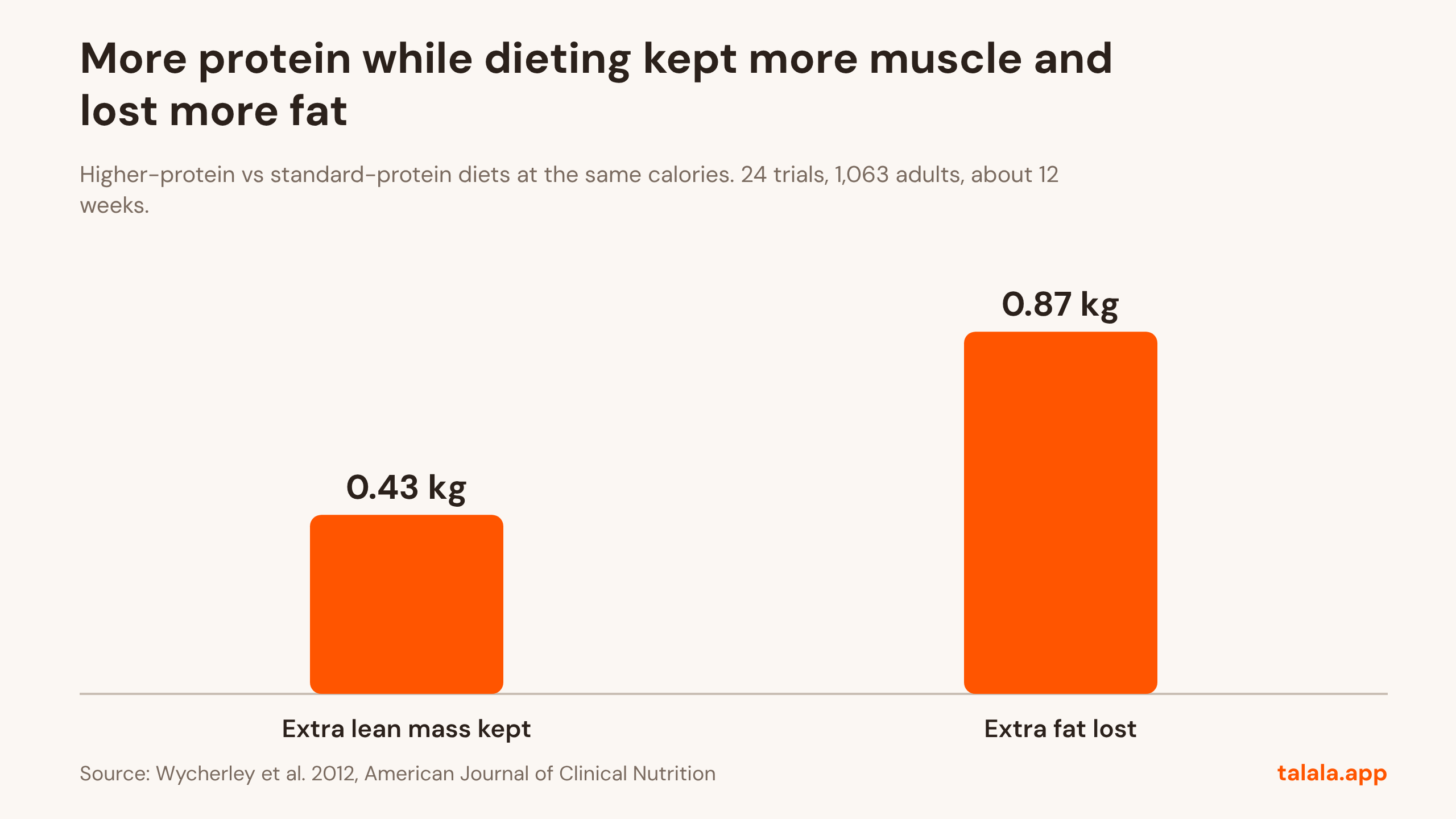
Extra protein helps once you're eating less, too. In a meta-analysis of 24 diet trials with 1,063 adults, people on a higher-protein diet with the same calories kept about 0.4 kg more lean mass and lost about 0.9 kg more fat over roughly 12 weeks (Wycherley et al., 2012).
In real life that's protein at every meal, like eggs, Greek yogurt, chicken, fish, tofu or beans. Our protein calculator does the math from your weight. If you have kidney disease or another medical condition, I'd run your number past your doctor first.
How big a calorie deficit is too big to keep muscle?
Bigger than about 500 calories a day. In the Murphy and Koehler analysis, a deficit of around 500 calories a day was enough to stop muscle gains, and the authors suggest staying under 500 a day if you want to keep the muscle you have (Murphy & Koehler, 2021).
So I'd start well under that. Find your maintenance calories (what you need to stay the same weight) with our TDEE calculator and eat a bit less than that. I'd adjust from there based on how your workouts feel.
I'd take these as signs it's time to eat a bit more: you're dragging through workouts, your weights are going backward for a couple of weeks, you're starving by mid-afternoon, or you can't sleep. If your period changes or stops, that's one for your doctor. And if you're pregnant or breastfeeding, have diabetes, or have a history of disordered eating, I'd talk to your doctor or a registered dietitian before cutting calories at all.
How can you tell if you're losing muscle or fat?
I'd use your weights and reps as the everyday clue. Strength usually still goes up in a small deficit, so numbers sliding for a few weeks are what I'd watch for. The scale can't tell you which one moved, since it weighs fat, muscle and water all at once. Your period can mess with it too: in a year-long study of 62 women, they felt the most bloated on the first day of their period (White et al., 2011).
| What to track | How often | What it tells you |
|---|---|---|
| Weights and reps | Every session | Whether you're holding on to strength |
| Scale weight | A few mornings a week, averaged | Overall trend, jumpy day to day |
| Waist measurement | Every 2 to 4 weeks, same point in your cycle | Fat around your middle |
Talala, the AI personal trainer app, remembers every set you've ever logged, and if a weight suddenly feels heavier than last week, you can ask your coach about it mid-workout. If your numbers have stalled and you're not sure the deficit is why, there's more in why you've stopped getting stronger.
Does cardio make you lose muscle in a calorie deficit?
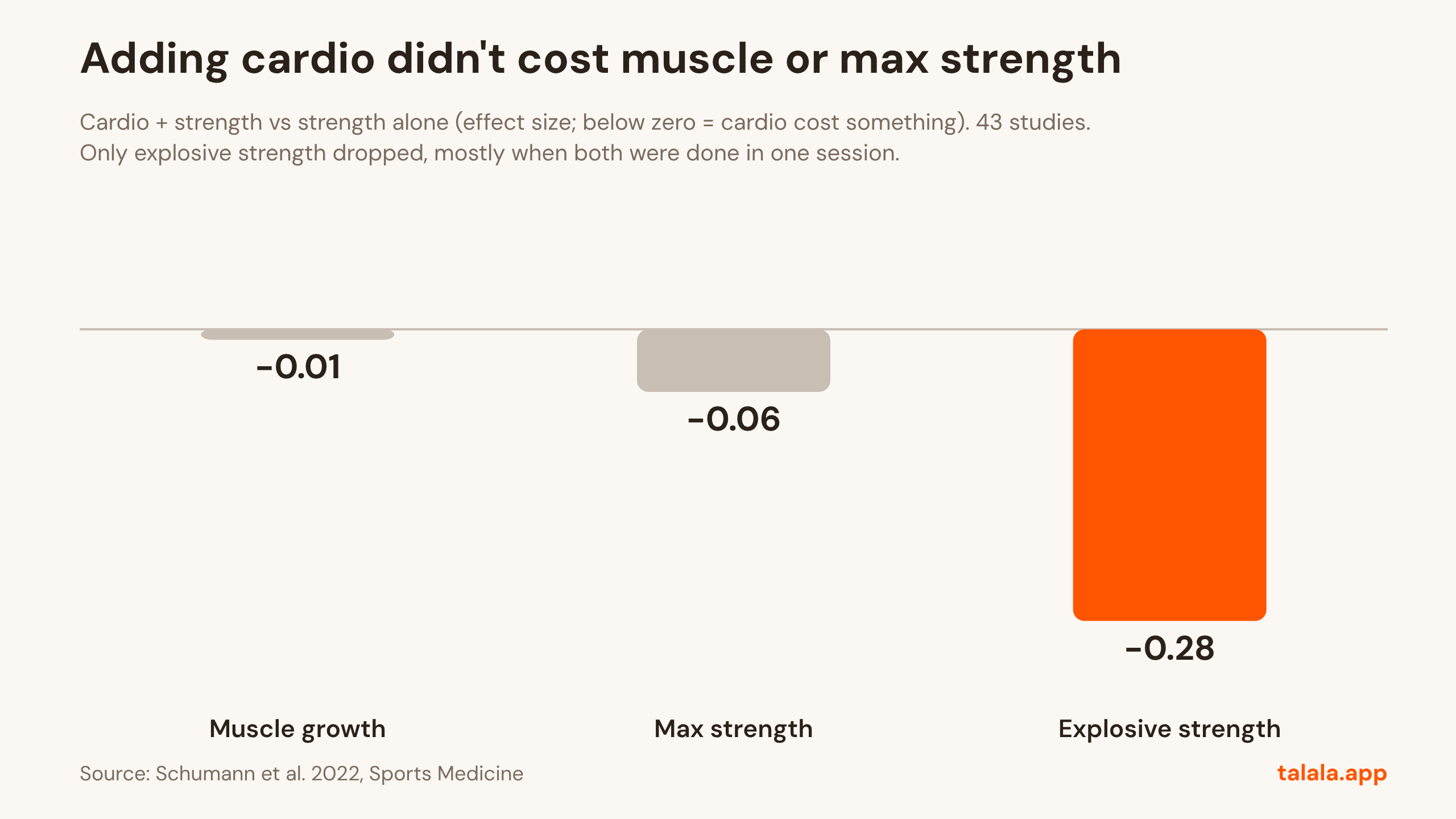
No. In the Deller analysis, cardio on its own helped a little, and strength training plus cardio kept the most lean mass of any group. Outside a deficit, a meta-analysis of 43 studies found adding cardio to strength training didn't change muscle growth or max strength (Schumann et al., 2022).
I'd keep some anyway for your heart and lungs, so if running used to be your thing, it can come back. On days you do both, I'd do strength first. And if you wear an Apple Watch, your runs and walks count toward your plan.
What does a week of training look like in a calorie deficit?
If you've got about 30 minutes, I'd do three short full-body sessions plus easy cardio: Full body A on Monday and Friday, Full body B on Wednesday, an easy walk, run or bike on Tuesday and Saturday, and rest the other days.
Full body A
| Exercise | Sets x reps | Rest | Home swap |
|---|---|---|---|
| Goblet squat | 3 x 8 to 10 | 90 sec | Same, with a full backpack |
| Dumbbell bench press | 3 x 8 to 10 | 90 sec | Push-ups, hands on a counter |
| Seated cable row | 3 x 10 to 12 | 60 to 90 sec | Band row |
| Hip thrust | 3 x 10 to 12 | 60 to 90 sec | Glute bridge |
| Dead bug | 2 x 8 per side | 60 sec | Same |
Full body B
| Exercise | Sets x reps | Rest | Home swap |
|---|---|---|---|
| Leg press | 3 x 10 to 12 | 90 sec | Reverse lunge |
| Lat pulldown | 3 x 10 to 12 | 60 to 90 sec | Band pulldown over a door |
| Dumbbell step-up | 2 x 8 per leg | 60 to 90 sec | Step-ups on a stair |
| Dumbbell shoulder press | 2 x 10 | 60 to 90 sec | Same, with water jugs |
| Plank | 2 x 20 to 30 sec | 60 sec | Same, knees down if you need |
Warm up with five minutes of easy cardio and a light first set. For weight, I'd pick something where the last two reps feel hard but still look like your first rep, and go up a little once you hit the top of the range on every set. If you're brand new to the gym, the 4-week beginner gym plan for women builds up to this more slowly.
If you'd rather have the whole thing planned for you, here's how Talala does it. Your coach is with you every step of the way, talking you through every set and keeping you motivated. There's a backup move ready if the leg press is taken, and if a week goes sideways because a kid's sick, you can ask Coach to rework the rest of the month.
FAQ
Can you build muscle in a calorie deficit?
It can happen, but it's slower while you're eating less (Murphy & Koehler, 2021). If building muscle is your main goal for a while, eating at maintenance makes that easier.
Is it normal to feel weaker in a calorie deficit?
An off day here and there is normal, but in the Murphy and Koehler analysis, strength gains were about the same whether people ate less or ate enough. If your weights have been going backward for a couple of weeks, I'd eat a bit more.
Do you need more protein in a deficit than when you're eating normally?
Possibly, if you've been strength training a while. The ISSN says people who already strength train may need 2.3 to 3.1 g/kg a day to keep the most lean mass while eating less (ISSN position stand). I'd start around 1.6 g/kg and move toward 2.2 if that's easy for you to eat.
How many days a week should I strength train in a deficit?
Two to three. The WHO recommends strength training on 2 or more days a week (WHO guidelines on physical activity, 2020). There's more on picking your number in how often should women strength train.
Obviously I'm not your doctor, so if something hurts or you're postpartum, check with a doctor or physio first.
Talala is where your plan is only yours
Made by women, made for you, backed by science
- Get a workout plan built around your goals
- AI coach led workout sessions, never feel confused about the gym again
- Your coach with you every step of the way, keeping you motivated
Meet your personal trainer: every workout planned for you, and coached in your ear. Download Talala on the App Store